
A studio service
Batch genealogy across SAP, MES and LIMS one trace, every system, in minutes.
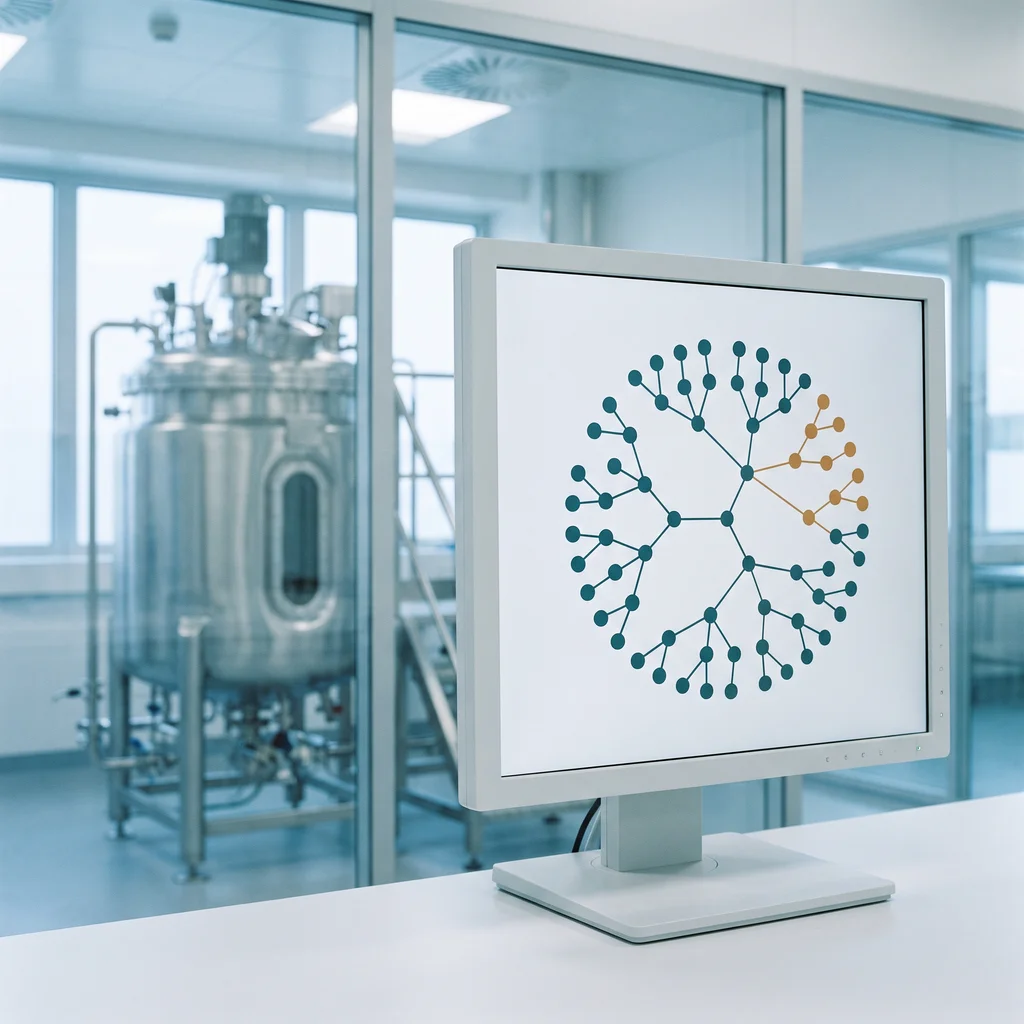
SAP's batch where-used list traces what happened inside SAP. A real recall question crosses systems: the MES record, the LIMS results, the courier's shipment, the intermediate that was split and pooled. We build genealogy that joins them on the lot and batch as things happen, so a forward or backward trace is a query, not a week of exports.
The facts behind this module
21 CFR 211.150(b)
Distribution procedures shall include “a system by which the distribution of each lot of drug product can be readily determined to facilitate its recall if necessary.”
21 CFR 211.184(c)
Records shall include “an individual inventory record of each component, drug product container, and closure and, for each component, a reconciliation of the use of each lot.”
39 → 111
FDA CDER warning letters on manufacturing or GMP subjects rose from 39 in 2023 to 78 in 2024 and 111 in 2025.
Quoted from the sources linked. We add no estimates of our own.
What it looks like
Batches affected
4
Sponsors affected
2
Shipments
3
Trace time
6 s
| Level | Item | Source system | Quantity | Status |
|---|---|---|---|---|
| Raw material | RM-88213 buffer salt | SAP | 120 kg | Released |
| Intermediate | INT-5521 buffer prep | MES | 2,000 L | Released |
| Batch | B-24062 | SAP + MES | 18.4 kg | Released |
| QC result | B-24062 endotoxin | LIMS | Pass | Confirmed |
| Shipment | SH-7781 to sponsor | Logistics | 18.4 kg | Released |
Interface concept with invented sample data, shown to illustrate the design. It is not a screenshot of a live system.
How it connects
SAP S/4HANA
- Batches, QM, EWM, planning
- Stays the system of record
- Core left standard, nothing changed inside
The app, in your tenancy
- SAP BTP, Azure or AWS, your region
- Audit trail, roles, single sign-on
- Read-only in a Pilot; write-back by agreement
People and plant systems
- Your teams, by role
- Sponsors, each to their own data
- MES, LIMS, QMS and logger platforms
SAP's clean-core rule, quoted: “Extensions must be developed using only released local or remote public SAP APIs, BAdIs, or ABAP RESTful application programming model business object (BO) extension points.” SAP PRESS, SAP S/4HANA Clean Core: Principles, Benefits, and Best Practices.
N° 01What SAP already covers
We start from SAP, not against it.
SAP batch management and the batch where-used list trace goods movements inside SAP. This module joins it to equipment, in-process results, executed batch records and courier data held in other systems. This module is a side-by-side extension: it reads and writes SAP only through released APIs and leaves the core standard.
N° 02Where it helps
Four situations this module is built for.
01
Traces assembled by hand
Exports from SAP, MES and LIMS stitched together in a spreadsheet. We keep the links live.
02
Intermediates that break the tree
Split, pooled and reworked intermediates keep their parentage across systems.
03
Mock recalls on paper
Timed recall simulations in the system, with the gaps recorded for the next audit.
04
Inspectors waiting
A read-only inspection view scoped to exactly what was asked.
N° 03What the module covers
Scope, in plain terms.
01
Genealogy graph
Lots, batches, intermediates, equipment and shipments linked as they are produced and consumed.
02
Forward & backward trace
From any lot or batch, the full tree both ways, exportable.
03
Mock recall
Timed simulations listing affected batches, sponsors, customers and quantities.
04
Inspection view
Read-only, scoped access for auditors and inspectors.
N° 04For each person in the decision
One page, six readers.
01
Supply chain lead
The scope above, three fixed-scope packages with prices, and a read-only Pilot you can run on one site before committing.
02
QA and validation
GAMP 5 Category 5 development documents, executed developer IQ/OQ evidence, Annex 11 and Part 11 controls in the GxP-ready package. You run and sign validation.
03
IT and your SAP team
Released SAP APIs only, no changes inside SAP, one least-privilege technical user, deployed in your own tenancy and region.
04
Sponsor-facing teams
Each sponsor sees only their own data, enforced in the data layer, with every access logged.
05
Procurement
Fixed scope and price per package, a written not-included list, and our vendor questionnaire answered in full on request.
06
Finance
The price shown is ours. SAP licences, including any SAP Digital Access for documents created in SAP, hosting and validation effort are yours and are listed as not included.
N° 05The Pilot, week by week
Eight to ten weeks, read-only from SAP.
01
Weeks 1–2: scope and access
Requirements workshop, the list of SAP APIs to be read, a technical user from your SAP team, and sample data agreed.
02
Weeks 3–5: build
The module built in your tenancy against your SAP test system, with a working demo every week.
03
Weeks 6–7: your data
Connected to the agreed SAP data, tested by your users, findings fixed.
04
Weeks 8–10: live on one site
Go-live for up to 25 users, a handover session, and a written decision paper for the Production package.
N° 06Your three options
Inside SAP, packaged, or beside SAP.
01
Customise inside SAP
Done by your SAP partner. SAP's clean-core rule limits extensions to released APIs and extension points, and each change follows your SAP change and validation process.
02
Buy a packaged product
A vendor's standard product and roadmap, with its own licence, validation package and integration to your SAP.
03
Build beside SAP (this page)
An app scoped to your process, in your tenancy, connected through released SAP APIs, with the source code and documentation handed to you.
N° 07AI assists
Where AI helps, and where a person decides.
Designed to the draft EU GMP Annex 22: predictive models are static, versioned and show their confidence; generative tools only draft for a person to confirm. No assist releases, rejects or ships a lot.
01
Gap finder
A static, versioned model flags links that look missing, such as consumption with no matching issue, with a confidence score for a person to check. Supports, never decides.
02
Trace narrative
A draft written summary of a trace for the investigation report, reviewed and edited by QA before use.
N° 08Investment
Pilot, production, or GxP-ready.
Pilot
From $36,000
One site, read from SAP through released APIs, live in 8–10 weeks.
- Genealogy from SAP batch where-used and goods movements
- Forward and backward trace with export
- Read-only connection to SAP S/4HANA (OData APIs and CDS views), no core changes
- Audit trail on every record, role-based access, SSO with your identity provider
- One site, up to 25 named users
- Not included: write-back to SAP, electronic signatures, validation documentation, SAP BTP licences
Production
From $58,000
Two-way with SAP and one more plant system, across sites.
- Everything in Pilot
- MES batch record or LIMS results joined to the SAP genealogy
- Timed mock recall reports
- Two-way integration through SAP APIs or SAP Integration Suite, clean-core compliant
- Digital Access check with your SAP licence team before any write-back is switched on
- Up to three sites and 250 users
- 60 days of hypercare after go-live
- Not included: validation documentation, SAP or BTP licences (including any SAP Digital Access your contract requires for documents created in SAP), SAP-side configuration by your SAP partner
GxP-ready
From $92,000
Built and documented for GMP use.
- Everything in Production
- 21 CFR Part 11 / EU Annex 11 electronic signatures and record controls
- GAMP 5 Category 5 SDLC pack: URS trace matrix, FS/DS, code review records
- IQ/OQ scripts with executed developer evidence; change control for later releases
- Not included: validation execution and QA sign-off (your CSV team), hosting qualification, SAP licences
Before you buy
What you get
- An independent build that connects to SAP only through SAP's released APIs
- A read-only Pilot that creates nothing in SAP, so it carries no SAP licence exposure
- Delivery alongside your SAP partner and IT, who keep control of SAP itself
What we don’t do
- SAP licences, or SAP Digital Access for documents a two-way build creates in SAP
- Changes to your SAP configuration or custom code inside SAP
- SAP certification of the integration, unless you ask us to scope it in
DesignKompanie is an independent studio and is not affiliated with, endorsed by or a partner of SAP SE. SAP and SAP S/4HANA are trademarks of SAP SE.
N° 09Questions
The answers we give most often.
- Doesn't SAP already do this?
- Inside SAP, yes. The work is joining SAP to the MES, LIMS and logistics data where the rest of the story lives.
- How fast is a trace?
- Seconds once the links are captured; capturing them at each movement is what the integrations do.
- Does it cover serialised units?
- Lot and batch level. Unit serialisation stays in SAP ATTP or your serialisation system; we link to it where needed.
- Are you an SAP partner?
- No. We are an independent studio. We build beside SAP using its released APIs and work with your SAP partner, who stays responsible for SAP itself. If you need the integration certified by SAP, we scope that into the project.
N° 10Related
- Pharma supply chain apps for SAP S/4HANA
- Security, validation & your SAP partner
- Sponsor portal & client-owned material
- Cold chain & excursion evidence
- Control tower across SAP, MES and LIMS
- GMP warehouse floor app for SAP
- Campaign material planning for SAP
- Supplier CoA intake for SAP QM
- Sponsor quality notifications & approvals
- Tech transfer workspace
- AI assist layer
- Enterprise app development
Start your book
Planning the Cross-system batch genealogy build?
Tell us your sites, the systems you run and what has to change. You'll get a scoped plan and a fixed price within two business days.